Jawbone Restoration & Implant Support
Bone Grafts in Northridge, CA
Rebuild bone structure and create a stronger foundation for your smile.
Bone grafting is a restorative procedure used to rebuild areas of the jaw affected by bone loss. By strengthening the jawbone, bone grafts can improve oral stability, support future dental implants, and help maintain healthy facial structure. This treatment plays an important role in long-term restorative and implant planning.

Boosting Confidence and Smiles with Expert Care
Bone Grafts at Northridge Dental Clinic
Bone grafting helps patients in Northridge, CA restore lost jawbone caused by missing teeth, periodontal disease, trauma, or prolonged tooth loss. Rebuilding bone structure can improve oral health stability and create adequate support for future restorative treatments such as dental implants.
Why Bone Grafting May Be Needed
Jawbone loss can occur gradually after teeth are lost or when periodontal disease damages supporting structures.
- Dental Implant Preparation Create adequate bone support for implant placement.
- Bone Preservation Help maintain facial structure and jaw stability.
- Periodontal Bone Loss Treatment Restore areas affected by advanced gum disease.
- Post-Extraction Support Reduce bone shrinkage after tooth removal.
How Bone Grafting Works
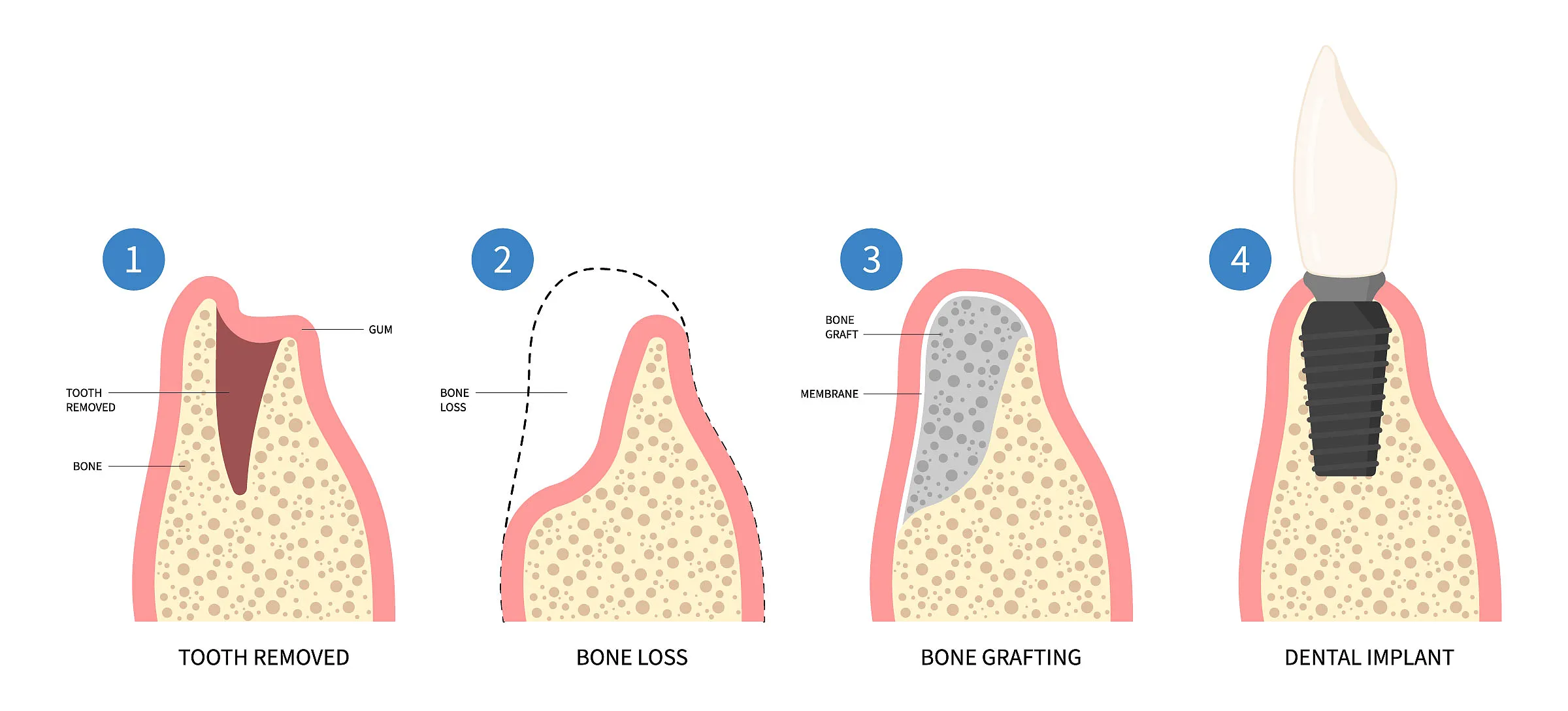
The procedure involves placing grafting material into areas of bone deficiency to encourage regeneration and healing over time.
- Bone Regeneration Support Stimulate the body’s natural healing and bone-building process.
- Customized Treatment Planning Tailored grafting approach based on the extent of bone loss.
- Foundation for Future Restorations Improve support for implants and other restorative treatments.
- Long-Term Stability Help preserve jaw structure and oral function.
Benefits of Bone Grafting
Bone grafting can improve both restorative outcomes and long-term oral health stability.
- Restore jawbone volume and density
- Improve candidacy for dental implants
- Support facial structure and smile appearance
- Help prevent further bone deterioration
Strengthen the Foundation of Your Smile
Bone grafting can help rebuild lost jawbone and support healthier, more stable restorative outcomes. A personalized evaluation can determine whether bone grafting is recommended as part of your treatment plan.
The short answer
A bone graft is a procedure that adds bone or bone-like material to areas of the jaw where bone has been lost to missing teeth, gum disease, trauma or infection. The grafting material is placed into the area of deficiency, usually under local anesthesia, where it encourages the body’s natural bone-building process over the following months. It is used to create enough support for dental implants, reduce bone shrinkage after an extraction and help maintain jaw stability and facial structure.
Bone Grafts FAQ
- What is a bone graft?
- A bone graft is a procedure that adds bone or bone-like material to areas of the jaw where bone loss has occurred. The material supports the body’s natural healing and bone-building process. Over time, this helps restore jawbone volume and density.
- Why would I need a bone graft?
- A bone graft is often recommended to support dental implants, preserve jaw structure or restore bone lost to gum disease or tooth loss. It can also reduce bone shrinkage after a tooth is removed. Your dentist will explain the reason that applies to your situation.
- Is bone grafting painful?
- Bone grafting is typically performed with local anesthesia to keep you comfortable. Mild soreness during recovery is normal. Following your aftercare instructions helps the area heal well.
- How long does bone graft healing take?
- Bone graft healing often takes several months for the bone to integrate. The exact time depends on the size and location of the graft. Your dentist will monitor the area before moving on to the next stage of treatment.
- Can bone grafting improve implant success?
- Yes, bone grafting can improve implant success. It provides the support and stability an implant needs for long-term placement. A graft can make implants an option for patients who would otherwise not have enough bone.
- What causes jawbone loss?
- Common causes of jawbone loss include missing teeth, gum disease, trauma, infection and prolonged tooth loss. The loss often happens gradually after teeth are lost. Gum disease can also damage the structures that support the teeth.
- Will insurance cover bone grafting?
- Insurance coverage for bone grafting depends on the reason for treatment. It also depends on your insurance provider’s benefits and limitations. The team can help you review your plan.
- How do I get started?
- You can get started with a comprehensive evaluation and imaging. These show how much bone is present and where it is needed. The dentist can then tell you whether bone grafting is recommended as part of your treatment plan.